
Choosing among jewelry polishers for beginners can be difficult because polishing, deburring, cleaning, and final finishing often require different tools. The right option depends on your workspace, jewelry materials, desired finish, and comfort with variable speed or abrasive media.
This roundup compares compact kits, bench polishers, rotary tumblers, and accessory sets so you can find a practical starting point without paying for capabilities you may not use.
Best 10 Jewelry Polishers for Beginners Picks for 2026
Best Variable-Speed Pick
Compact Jewelry Bench Polisher

- 1,750–8,500 RPM variable-speed range
- Includes cotton and fiber wheels, compound, and safety glasses
- Compact 320W design for hobby workspaces
Best For: Beginners seeking adjustable bench-top polishing
Best Cordless Pick

- USB-rechargeable tool weighs only 0.5 lb
- Includes 11 polishing heads and a storage box
- Up to 35,000 RPM for detail work
Best For: Portable, light-duty jewelry and craft polishing
Best Complete Bench Kit

- 500–10,000 RPM adjustable speed
- Includes wheels, compounds, goggles, and mounting hardware
- 400W motor with freestanding or bench-mounted setup
Best For: Beginners building a more capable home polishing station
Best Tumbler Option

- 3 kg capacity for batch polishing
- Five speeds with timed bidirectional rotation
- Designed for small and medium workpieces
Best For: Beginners who prefer batch polishing and recessed-area access
Versatile Starter Kit
246-Piece Dremel Polishing Wheel Set

- Assorted 1/2- and 1-inch wheels
- Includes three polishing compounds
- Uses compatible 1/8-inch-shank tools
Best For: Beginners building a flexible rotary-tool polishing setup
Adjustable Bench Pick
3-in-1 Mini Belt Sander and Polisher
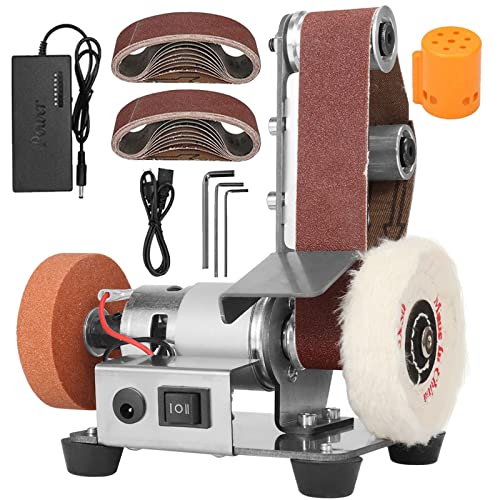
- Combines sanding, grinding, and buffing
- Offers seven adjustable speed settings
- Compact stainless-steel benchtop design
Best For: Jewelry makers wanting one dedicated multi-function machine
Batch-Finishing Option

- 3KG electric rotary finishing capacity
- Five speeds and a built-in timer
- Includes polishing beads
Best For: Beginners polishing multiple jewelry pieces in batches
Powerful Adjustable Pick

- 1/2HP motor for metal, jewelry, and wood
- Stepless 0–8000 RPM speed control
- Includes five wheels and polishing compound
Best For: DIY users needing a versatile, speed-adjustable bench polisher
Easy Batch-Finishing Pick

- 3 kg capacity for batch polishing
- Five speeds with a 10–60 minute timer
- Bidirectional rotation for varied finishes
Best For: Beginners polishing jewelry, gemstones, coins, and small metal parts in batches
Accessory-Rich Starter Pick

- Brushless, low-maintenance motor
- Three wheels for rough to fine work
- Includes 100 sculpting accessories
Best For: Hobbyists handling small jewelry and detail-oriented DIY projects
Best Variable-Speed Pick – Compact Jewelry Bench Polisher
For beginners comparing jewelry polishers for beginners, this compact bench machine offers adjustable control without taking up much workspace. Its 320W motor runs from 1,750 to 8,500 RPM, while the included wheels and compound provide a useful starting setup for polishing and buffing.
Best For: Beginners who want a versatile, corded bench polisher for jewelry, gems, and small metal components.
Pros:
- Variable speed supports slower buffing through faster finishing work.
- Includes six cotton wheels, two abrasive fiber wheels, compound, and safety glasses.
- Compact aluminum design is portable and suitable for hobby workspaces.
Cons:
- Its 320W motor is less powerful than the larger 400W option.
- It requires an AC outlet and weighs about 3.26 kg.
This is a practical all-around starter for users who value speed adjustment and included accessories. The compact footprint makes it easier to fit into a home workshop, while the broad RPM range leaves room to build polishing confidence.
Best Cordless Pick – Mini Precision Polisher Kit
This cordless mini tool is a convenient choice among jewelry polishers for beginners who need portability and precise control. It weighs 0.5 lb, recharges by USB, and includes 11 polishing heads for detail work, though it is intended for lighter-duty applications rather than demanding bench work.
Best For: Beginners handling small jewelry, craft, model-making, repair, or polishing tasks in tight spaces.
Pros:
- Cordless, USB-rechargeable design is easy to use at home or while traveling.
- Up to 35,000 RPM provides fast polishing for delicate detail work.
- Eleven heads and a storage box support different polishing stages.
Cons:
- Not suitable for heavy-duty work.
- The high maximum speed may require careful control on delicate materials.
Choose this kit when convenience and fine access matter more than sustained power. Its lightweight body and varied heads make it approachable for small projects, repairs, and finishing touches.
Best Complete Bench Kit – 400W Jewelry Polisher
For beginners who want a more substantial setup, this 400W bench polisher combines a broad 500–10,000 RPM range with a starter accessory bundle. Its non-slip base can be bench-mounted, and the included wheels, compounds, safety glasses, and hardware reduce the need for immediate add-on purchases.
Best For: New users who want a stable, corded bench machine for jewelry and other small-to-medium polishing jobs.
Pros:
- Adjustable speed accommodates gentle buffing and higher-speed finishing.
- Includes six cotton wheels, two fiber wheels, three compounds, goggles, and mounting hardware.
- 400W motor and secure base support heavier work than a small cordless polisher.
- Can be freestanding or bench-mounted in a home workspace.
Cons:
- Larger and less portable than a mini cordless tool.
- Requires corded electric power and bench space.
This is the strongest choice here for beginners planning to polish regularly and wanting room to handle varied materials. Its accessory package and mounting options make the learning curve more manageable, while the higher power supports broader workshop use.
Best Tumbler Option – 3kg Jewelry Polishing Tumbler
YaeMarine 110V 80W Jewelry Polisher Tumbler 3kg 6.6 Lbs Capacity Jewelry Polisher Machine Tumbler
Check Price On AmazonThis jewelry tumbler takes a different approach from wheel-based jewelry polishers for beginners by polishing through centrifugal motion in a rotating barrel. It offers a 3 kg capacity, five speed settings, timed bidirectional rotation, and a relatively quiet design for small and medium workpieces.
Best For: Beginners who need batch polishing, especially for small or medium pieces with holes or difficult-to-reach areas.
Pros:
- 3 kg capacity supports polishing multiple small pieces at once.
- Centrifugal motion is designed to improve polishing efficiency.
- Five speeds, timed operation, and bidirectional rotation provide flexible use.
- Simple operation and low-noise performance suit small workshops.
Cons:
- It is a tumbler, so it does not provide the direct hand-controlled buffing of a wheel polisher.
- At 9.2 lb, it is less convenient to move than a mini polisher.
- The listed 80W motor is intended for small and medium workpieces rather than heavy-duty jobs.
Consider this model when your priority is consistent batch processing rather than detailed spot polishing. Its timed, reversible operation can simplify repetitive work, particularly on pieces with recessed or hard-to-reach areas.
Versatile Starter Kit – 246-Piece Dremel Polishing Wheel Set
For beginners comparing jewelry polishers for beginners, this accessory kit is a flexible way to start if you already own a compatible rotary tool or hand drill. It combines assorted wool, cotton, cloth, and metal wheels with three polishing compounds for cleaning, smoothing, and shining metal surfaces.
Best For: Beginners who want an adaptable polishing accessory set for jewelry and small metal projects.
Pros:
- Includes assorted wheel shapes and sizes for different surfaces and tight spots.
- Works with compatible Dremel rotary tools, grinders, polishers, and hand drills using 1/8-inch shanks.
- Includes brown, white, and green compounds for rough, intermediate, and high-gloss polishing.
Cons:
- It is an accessory kit, so a compatible power tool is required.
- The manufacturer recommends lower speeds because excessive speed can cause the brush to separate.
This is a practical choice for learning different polishing approaches without buying separate wheels and compounds. Its broad assortment is useful, though beginners should start at a low speed and match the compound to the metal.
Adjustable Bench Pick – 3-in-1 Mini Belt Sander and Polisher
This compact 3-in-1 machine is a more complete option for beginners searching for jewelry polishers for beginners. Its vertical belt, grinding wheel, and buffing wheel support sanding and polishing, while seven speed settings provide more control for detailed hand work.
Best For: Jewelry makers who want a dedicated benchtop machine for sanding, grinding, and buffing.
Pros:
- Combines a belt sander, grinding wheel, and buffing wheel in one compact unit.
- Seven speed settings help accommodate jewelry, resin, metal, and other projects.
- Heavy-duty stainless-steel construction and anti-vibration rubber feet support tabletop use.
- All-copper motor delivers adjustable speeds from 4,000 to 9,000 rpm.
Cons:
- Grinding-wheel use at high speeds may create more vibration.
- The manufacturer recommends clamping the machine to a table for greater stability.
- It requires a corded electrical connection.
Compared with a simple rotary accessory kit, this machine offers a dedicated workstation and multiple functions. The adjustable speed is beginner-friendly, but securing the unit is especially important when using the grinding wheel.
Batch-Finishing Option – 3KG Jewelry Polisher Tumbler
This jewelry tumbler is designed for beginners who want a machine-based approach to polishing multiple pieces rather than hand-buffing each item. The supplied listing describes a 3KG electric rotary finisher with a timer and five speed controls, plus polishing beads for surface cleaning and finishing.
Best For: Beginners seeking a rotary tumbler-style setup for batch jewelry finishing.
Pros:
- Provides a 3KG capacity for handling multiple pieces in a finishing workflow.
- Five speed settings allow adjustment for different polishing needs.
- Includes a timer for more controlled polishing sessions.
- Supplied with polishing beads for cleaning and surface finishing.
Cons:
- The supplied notes do not provide detailed information about operating noise or cycle duration.
- A tumbler is less suited to precise, spot polishing than a handheld wheel.
This is the most suitable of these options for repeatable batch finishing. Choose it when convenience and capacity matter more than direct control over a tiny polishing area, and verify the included media is appropriate for your jewelry.
Powerful Adjustable Pick – Compact VEVOR Bench Buffer
For beginners comparing jewelry polishers for beginners, this compact bench buffer offers substantial power and flexible speed control. Its 0–8000 RPM range supports both careful polishing and faster material removal, while the included wheels and compound make it easier to start working with metal jewelry.
Best For: DIY users who want a versatile, speed-adjustable polisher for jewelry, metal, and occasional wood projects.
Pros:
- Powerful 1/2HP motor handles jewelry polishing, metalwork, and wood sanding.
- Stepless 0–8000 RPM control provides flexibility for different tasks.
- Includes cotton wheels, abrasive fiber wheels, polishing compound, and tapered spindles.
- Compact cast-aluminum base with rubber feet helps limit wobbling.
Cons:
- The higher power may be more than a beginner needs for very delicate work.
- It is corded and requires a suitable workbench or stable surface.
This is a strong all-around choice if you want one small machine that can cover polishing and light material removal. The adjustable speed and included accessories help beginners experiment, while its compact footprint suits limited workspaces.
Easy Batch-Finishing Pick – VEVOR Rotary Jewelry Tumbler
Among jewelry polishers for beginners, a rotary tumbler is a straightforward option for smoothing and polishing multiple small pieces with less hands-on buffing. This model has a 3 kg capacity, five speeds, bidirectional rotation, and a timer for adjusting the process to different materials and finishes.
Best For: Beginners who want to tumble-finish jewelry, gemstones, coins, and small metal parts in batches.
Pros:
- 3 kg capacity supports batch polishing.
- Five speeds and a 10–60 minute timer allow adjustable operation.
- Bidirectional rotation is designed for varied surface-finishing needs.
- Leak-resistant polycarbonate container and nonslip rubber base support stable use.
Cons:
- The supplied notes do not list polishing media or beads as included accessories.
- Its 150 RPM operation is intended for tumbling rather than direct wheel buffing.
This tumbler is appealing when you prefer a more automated finishing process instead of holding each piece against a wheel. Factor in the need for appropriate tumbling media and the longer batch-oriented workflow before buying.
Accessory-Rich Starter Pick – VEVOR Mini Jewelry Buffer
For shoppers seeking jewelry polishers for beginners, this lightweight bench buffer combines a compact footprint with a brushless motor and a broad accessory set. Its three wheel types cover rough, moderate, and finer work, while the included bits add flexibility for engraving and small DIY projects.
Best For: Hobbyists who want a small, low-maintenance machine for jewelry, gemstones, metal, wood, and detail work.
Pros:
- Brushless motor is designed for durability, lower noise, and minimal maintenance.
- Soft wool, moderate fiber, and hard grinding wheels cover several finishing stages.
- Includes 100 sculpting accessories, a chuck, wrench, and user manual.
- Compact, lightweight design includes nonslip feet and a transparent debris deflector.
Cons:
- Its 29.7-watt motor and 3590 RPM maximum are less powerful than the 1/2HP buffer in this roundup.
- The supplied notes do not mention variable speed control.
- The many accessories may take time for a new user to sort and learn.
This is a practical starter for detail-oriented hobby work, especially if you value a wide selection of bits over maximum motor power. Its brushless design and protective features make it approachable for small projects, though heavier polishing jobs may call for a stronger machine.
How We Picked the Best Jewelry Polishers for Beginners
We focused on features that make jewelry finishing more approachable: manageable size, straightforward controls, useful included accessories, speed flexibility, capacity, and the type of work each tool is designed to handle. We also considered whether a machine suits delicate pieces, small batches, larger metal components, or occasional DIY use.
Because no single polisher handles every task equally well, the selection includes bench buffers for hands-on polishing, rotary tumblers for batch finishing, cordless tools for detail work, and accessory kits for users who already own a compatible rotary tool.
Quick Comparison
- Best for general bench work: Variable-speed bench polishers offer greater control and support multiple wheels.
- Best for batch finishing: Rotary tumblers can process several small pieces together with less hands-on buffing.
- Best for detail work: Cordless mini polishers and Dremel-style kits reach tight areas and curved surfaces.
- Best for mixed DIY projects: Multi-function belt sander and bench grinder designs offer broader workshop utility.
- Best for upgrading existing tools: Wheel and compound kits add polishing capability without requiring a new motor.
Key Buying Factors for Jewelry Polishers for Beginners
Tool Type and Intended Finish
Choose a bench buffer for visible surface polishing and controlled use of compounds. A rotary tumbler is better for cleaning, smoothing, and finishing multiple compatible pieces at once, while a mini polisher is useful for detail areas and light touch-ups.
Speed Control
Adjustable speed is valuable when working with different metals, stones, compounds, and wheel materials. Beginners generally benefit from starting slowly, especially near edges and delicate settings, then increasing speed only when the piece and attachment allow it.
Capacity and Workspace
Check the machine’s footprint, voltage, noise, ventilation needs, and available bench space. Tumbler capacity matters if you plan to process batches, but a larger machine may be unnecessary for occasional small projects.
Included Wheels, Heads, and Compounds
Accessories can make a starter tool more useful, but quantity is not the same as compatibility. Confirm the shaft, mandrel, wheel diameter, abrasive type, and included compounds before assuming every attachment will suit your jewelry.
Safety and Control
Use eye protection, secure loose clothing and hair, and follow the manufacturer’s instructions. Keep a firm grip on small pieces, avoid excessive pressure, and use appropriate dust control when polishing materials that create fine particles.
Who Should Buy Which Jewelry Polishers for Beginners?
Choose a variable-speed bench polisher if you want a dedicated workstation for regular metal polishing and buffing. Choose a rotary tumbler if consistent batch processing and reduced hand work are priorities. Choose a cordless mini kit for portable detail work, light finishing, or limited workspace. Choose a Dremel-compatible accessory set if you already own the tool and want an economical way to expand its uses. Choose a multi-function sander, grinder, or buffer if jewelry is one part of a broader DIY workshop.
For most first-time buyers, prioritize controllable speed, stable operation, compatible accessories, and a clear match between the machine’s intended task and the finish you want to achieve.