
Bracelets collect skin oils, dust, and everyday residue that can dull metal and gemstones. The right polishing tool can restore a cleaner, brighter appearance without requiring a professional service.
This roundup compares 10 jewelry polishers for bracelets, from simple wipes and cloths to abrasive sticks, silicone polishers, and buffing wheels. Use the guide below to match the format and finish level to your jewelry.
Best 10 Jewelry Polishers for Bracelets Picks for 2026
Best Disposable Pads

- 50 pre-treated 2-inch foam pads
- Brightens and removes tarnish
- Works on gold, platinum, and sterling silver
Best For: Quick bracelet touch-ups and jewelry-making projects
Best Detail Tool Set

- 24-piece abrasive assortment
- Square, knife, and slim-edge profiles
- Includes four mandrels
Best For: Detailed jewelry-making and shaped bracelet components
Best Large Cloth
Connoisseurs Extra-Large Gold Cloth

- Generous 14-by-14-inch size
- Two-step cleaning and buffing system
- Includes an anti-tarnish shield step
Best For: Gold bracelets and larger jewelry pieces
Best Soak-and-Brush Cleaner

- 6-ounce liquid cleaner with tray
- Includes a cleaning brush
- Designed for gold, platinum, and titanium
Best For: Compatible gemstone bracelets with dirt and buildup
Best Complete Kit

- 100-piece assortment for varied polishing tasks
- 1/8-inch shanks fit most rotary tools
- Includes wheels, tips, and storage box
Best For: DIY users with a rotary tool
Best On-the-Go Option

- No-water cleaning for gold and silver jewelry
- 30 disposable wipes in a compact pack
- Helps remove tarnish and add anti-tarnish protection
Best For: Quick bracelet touch-ups at home or while traveling
Best for Quick Metal Touch-Ups
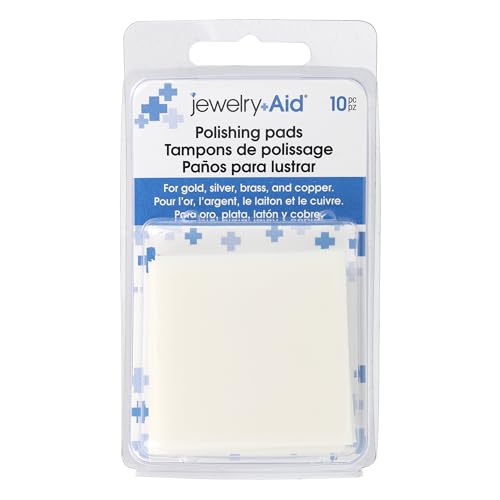
- Pre-treated foam pads are ready to use
- Micro-abrasives remove tarnish and brighten metal
- Works on gold, platinum, and sterling silver
Best For: Hand polishing metal bracelets and jewelry components
Easy Tarnish Care

- Ammonia-free, non-scratch formula
- Removes tarnish and restores shine
- 20 wipes for convenient cleaning
Best For: Routine bracelet and jewelry tarnish care
Precision Scratch Repair

- 600/3000-grit double-sided design
- Targets tarnish and minor scratches
- 20 sticks for detailed polishing
Best For: Controlled metal finishing and scratch repair
Simple Two-Surface Buffing

- White side brightens jewelry
- Green 1000-mesh side repairs scratches
- 20 compact polishing bars
Best For: Basic cleaning and brightening of metal jewelry
Best Disposable Pads – Shine Rite 50-Pack
For quick bracelet touch-ups, these Shine Rite pads are a convenient option among jewelry polishers for bracelets. The pre-treated 2-inch foam squares use bonded micro-abrasives to brighten, polish, and remove tarnish from gold, platinum, sterling silver, and other metal components.
Best For: Fast hand polishing, jewelry makers, and routine touch-ups on metal bracelets and components.
Pros:
- Includes 50 ready-to-use polishing pads.
- Helps brighten, polish, and remove tarnish.
- Useful for gold, platinum, and sterling silver.
- Disposable design is convenient for quick jobs.
Cons:
- Each pad is discarded after becoming completely soiled.
- The 2-inch size may require extra passes on larger bracelets.
This is a practical choice when you want a generous supply of compact, pre-treated pads rather than a reusable cloth or powered tool. Its fine abrasive format is especially handy for jewelry-making work and targeted bracelet polishing.
Best Detail Tool Set – Silicone Polishers Kit
Silicone Polishers KIT 24 Jewelry Polish Finish Abrasive Assortment Set Germany
Check Price On AmazonThis silicone polishers kit is designed for detailed jewelry work where different edges and shapes can help reach varied bracelet surfaces. The assortment includes square, knife, and slim-edge polishers in multiple sizes, plus four mandrels.
Best For: Jewelry makers and detail-oriented users who need assorted polisher shapes for bracelet components and finishing work.
Pros:
- Includes 24 abrasive silicone polishers.
- Offers square-edge, knife-edge, and slim-edge profiles.
- Provides multiple sizes for different detail areas.
- Comes with screw-head and threaded mandrels with nuts.
Cons:
- The supplied notes do not specify the individual grit levels.
- Its assortment format may be more than needed for occasional polishing.
Compared with a simple polishing cloth, this kit offers more shape flexibility for intricate bracelet work. It is best suited to users who already work with mandrels or want a broader selection of abrasive profiles.
Best Large Cloth – Connoisseurs Extra-Large Gold Cloth
For larger bracelets and simple at-home care, this 14-by-14-inch Connoisseurs cloth provides plenty of surface area. Its two-step dry-cleaning system uses an inner cloth to remove dirt and apply an anti-tarnish shield, followed by an outer cloth for buffing.
Best For: Gold bracelets and other gold jewelry needing a reusable, full-size polishing cloth.
Pros:
- Large 14-by-14-inch format covers bigger pieces comfortably.
- Two-step process cleans, protects, and buffs.
- Designed to polish gold to a high luster.
- Suitable for at-home or on-the-go use.
Cons:
- This version is intended for gold jewelry rather than silver.
- Only one cloth is included.
This cloth is a strong fit when bracelet size and easy manual polishing matter more than a multi-tool setup. The two-stage design also adds an anti-tarnish step, making it useful for regular gold-jewelry maintenance.
Best Soak-and-Brush Cleaner – Weiman Fine Jewelry Cleaner
For bracelets that need more than surface buffing, Weiman Fine Jewelry Cleaner combines a liquid soak with an included cleaning brush. The formula is intended for gold, platinum, and titanium jewelry, and can help remove dirt and buildup from fine jewelry with precious gemstones.
Best For: Gold, platinum, or titanium bracelets with gemstone-safe cleaning needs, including diamonds, sapphires, rubies, emeralds, and topaz.
Pros:
- Includes a cleaning tray and brush.
- Can soak jewelry for up to 30 minutes.
- Targets dirt, buildup, soap, lotion, and styling-product residue.
- Formulated for several precious gemstones.
Cons:
- Not formulated for silver jewelry.
- Should not be used on coral, ivory, amber, malachite, pearls, opals, jade, or turquoise.
- Requires rinsing and buffing after cleaning.
This is better viewed as a liquid jewelry cleaner than a traditional abrasive polisher. It is a useful alternative for compatible bracelets with embedded grime, but material restrictions should be checked carefully before use.
Best Complete Kit – Wool Felt Buffing Wheel Set
For shoppers comparing jewelry polishers for bracelets, this 100-piece rotary-tool kit offers multiple wool felt wheel and tip shapes for both broad surfaces and detailed areas. Its 1/8-inch shanks fit most rotary tools, making it a flexible option for polishing metal jewelry and other small parts.
Best For: DIY users who want a large assortment for bracelets, rings, watch cases, and detailed polishing work.
Pros:
- Includes 100 wheels, tips, and shanks in assorted sizes and shapes.
- Dense wool felt provides smooth contact for fine polishing.
- Suitable for jewelry, metal, glass, stone, acrylic, and watches.
- Storage box helps keep accessories organized.
Cons:
- Requires a compatible rotary tool for use.
- The large assortment may be more than needed for occasional touch-ups.
This is the most versatile choice of the three for hands-on polishing, especially when bracelets have edges, corners, or hard-to-reach details. Choose it if you already own a rotary tool and want broad accessory coverage.
Best On-the-Go Option – Connoisseurs Jewelry Wipes
For quick bracelet maintenance, these Connoisseurs wipes provide a no-water-necessary way to clean and polish gold and silver jewelry. The compact pack of 30 disposable wipes is convenient for at-home use or keeping in a travel kit.
Best For: Fast touch-ups on gold and silver bracelets when convenience and portability matter.
Pros:
- Works without water for simple, convenient cleaning.
- Designed to remove tarnish while applying an anti-tarnish shield.
- Compact package contains 30 individually usable wipes.
- Suitable for gold and silver jewelry, including bracelets.
Cons:
- Disposable wipes are less reusable than polishing pads or rotary-tool accessories.
- Supplied notes specify gold and silver use rather than a broad range of materials.
These wipes are the easiest pick for routine bracelet care and travel, particularly when you do not want to set up a tool. They are less suited to shoppers seeking a reusable or workshop-style polishing system.
Best for Quick Metal Touch-Ups – Beadsmith Polishing Pads
These pre-treated foam pads are a practical choice among jewelry polishers for bracelets when you need to brighten metal components or remove tarnish by hand. Their 2-inch size and permanently bonded micro-abrasives make them useful for quick cleaning, jewelry making, and small finishing jobs.
Best For: Hand polishing gold, platinum, and sterling silver bracelets and other metal jewelry components.
Pros:
- Pre-treated pads are ready to use without additional polishing compound.
- Micro-abrasives help brighten, polish, and remove tarnish.
- Suitable for gold, platinum, and sterling silver.
- Pack includes 10 disposable 2-inch squares.
Cons:
- Each pad should be discarded once completely soiled.
- Designed for metal rather than the broader material range supported by the buffing-wheel kit.
Choose these pads for controlled, hands-on bracelet touch-ups and jewelry-making work. They offer a simpler middle ground between disposable wipes and a rotary-tool setup, though ongoing use requires replacing soiled pads.
Easy Tarnish Care – Weiman Silver Wipes
For shoppers comparing jewelry polishers for bracelets, these individually portioned Weiman wipes offer a straightforward way to clean and brighten silver and other compatible metals. The ammonia-free, non-scratch formula is designed to remove tarnish while leaving a protective coating.
Best For: Routine polishing of silver bracelets and jewelry, including pieces with diamonds or gemstones.
Pros:
- Removes tarnish and restores shine to silver and other listed metals.
- Ammonia-free and designed for use on jewelry with diamonds or gemstones.
- Leaves a protective coating intended to slow tarnish from reforming.
- 20-count package is convenient for individual cleaning sessions.
Cons:
- Wipe format may be less suited to detailed scratch repair than an abrasive polishing stick.
- Supplied volume is limited to 1 fluid ounce.
This is the most convenient option of the three for general tarnish removal and shine maintenance. It also offers broad material compatibility, though heavily scratched metal may require a more targeted abrasive tool.
Precision Scratch Repair – CATIFLIN Polishing Sticks
Among jewelry polishers for bracelets, the CATIFLIN sticks stand out for two-step metal finishing. The green 600-grit side targets tarnish, oxidation, and minor scratches, while the white 3000-grit side buffs the surface for a brighter finish.
Best For: Detailed polishing of sterling silver, gold, platinum, watches, and stainless steel where controlled scratch and tarnish work is needed.
Pros:
- Double-sided 600/3000-grit design supports repair and finishing.
- Rod shape offers control in tight crevices.
- 20-piece pack provides multiple polishing sticks.
- Antioxidant ingredients add a layer intended to slow re-oxidation.
Cons:
- Green abrasive side should not be used on gold-plated jewelry or soft gems such as pearls and opals.
- Sticks should not be washed because water can ruin the active cleaning agents.
- Testing on an inconspicuous area is recommended before full application.
This is the more specialized choice for users who want abrasive control rather than a simple wipe. Its two-step process can address minor surface imperfections, but the usage restrictions make careful application important.
Simple Two-Surface Buffing – Silver Polishing Sticks
These double-sided bars provide a basic approach to jewelry polishers for bracelets and other small metal items. Use the white surface to brighten jewelry and the green 1000-mesh surface to work on dirt and scratches.
Best For: Basic cleaning and brightening of gold or silver bracelets, watches, cell phones, and similar metal surfaces.
Pros:
- Two surfaces provide separate polishing and scratch-repair functions.
- Compact 2.3-inch size is suitable for handling small items.
- 20-piece set offers a generous supply for repeated use.
- Designed for dirt and scratches on gold and silver jewelry surfaces.
Cons:
- The supplied notes do not specify a protective anti-tarnish coating.
- Compared with the CATIFLIN set, the stated grit information is less detailed.
- Using an abrasive surface may require care on delicate or plated pieces.
This set is a practical, uncomplicated option for occasional brightening and light surface work. Choose it when you want multiple compact bars, but consider a less abrasive method for especially delicate jewelry.
How We Picked the Best Jewelry Polishers for Bracelets
We organized these options by polishing method, surface control, convenience, and likely use case. The selection includes everyday cloths and wipes for light tarnish, pads and sticks for targeted polishing, liquid cleaner for compatible jewelry, and buffing wheels or abrasive kits for more involved work. We also considered pack size, grit variety, handling precision, and whether a product is better suited to occasional home care or repeated workshop use.
Because bracelet materials and finishes vary, no single polisher is ideal for every piece. Always check the manufacturer’s care instructions and test an inconspicuous area before treating the visible surface.
Quick Comparison
| Polisher type | Best for | Control level | Typical use |
|---|---|---|---|
| Polishing cloths and wipes | Light dirt, fingerprints, and routine shine | High | Fast maintenance |
| Polishing pads | Detailed hand polishing | High | Metal surfaces and edges |
| Polishing sticks | Localized tarnish or minor surface marks | Very high | Small areas and crevices |
| Liquid cleaner | Compatible gold, platinum, and gemstone jewelry | Medium | Cleaning before polishing |
| Silicone polishers and buffing wheels | Workshop or rotary-tool finishing | Medium to high | Repeated or heavier polishing |
Key Buying Factors for Jewelry Polishers for Bracelets
Match the Material and Finish
Gold, platinum, sterling silver, stainless steel, and plated finishes do not respond identically to abrasion. Gentle cloths and wipes are usually the safest starting point for routine care. Abrasive sticks, pads, and wheels can remove material or plating if used aggressively, so avoid them on delicate plating, brushed finishes, intentional oxidation, or soft gemstones unless explicitly approved.
Choose Control Over Speed for Detailed Designs
Bracelets with links, prongs, engraving, and tight crevices benefit from compact pads or double-sided sticks. Larger cloths are faster on broad, smooth surfaces, while rotary accessories cover more area but require careful pressure and speed control.
Consider Convenience and Storage
Pre-moistened wipes are practical for travel and quick touch-ups. Reusable cloths and pads can be more economical for frequent care, while multi-piece kits provide different grits or shapes for varied projects. Keep polishing materials clean so trapped grit does not scratch the bracelet.
Use Cleaners Safely
Liquid jewelry cleaners can remove residue before polishing, but gemstone compatibility matters. Follow the label, avoid soaking pieces with porous, treated, glued, or fragile stones, and dry the bracelet completely after cleaning.
Who Should Buy Which Jewelry Polishers for Bracelets?
Choose a polishing cloth or wipe if you want the simplest routine-care solution for smooth metal bracelets. Pick polishing pads when you want better hand control across links and contours. Double-sided polishing sticks suit shoppers dealing with small tarnished areas, crevices, or minor marks.
A liquid cleaner is useful when residue and buildup are the main problem and the bracelet’s materials are approved for that formula. Silicone polishers or wool felt wheels are better for experienced hobbyists with compatible rotary tools who need repeatable workshop-style finishing. If you are unsure about a valuable, antique, plated, or heavily scratched bracelet, use the gentlest option or consult a jeweler before polishing.