
The best jewelry polisher depends on whether you need gentle at-home cleaning, tarnish removal, surface finishing, or workshop-level buffing. This roundup compares ten options across those use cases.
You’ll find quick-clean products for gold and silver, plus tumblers, magnetic finishers, rotary tools, and bench buffers for more involved jewelry work. Match the tool to your materials, finish, and experience level before buying.
Best 10 Jewelry Polishers Picks for 2026
Best Adjustable-Speed Jewelry Polisher

- 0–10,000 RPM adjustable speed
- 350W motor with broad accessory kit
- Compact, stable metal design
Best For: Versatile jewelry and multi-material polishing in small workspaces
Best Liquid Jewelry Polisher

- Includes tray and cleaning brush
- Designed for gold, platinum, and select gemstones
- Simple soak, rinse, and buff process
Best For: Routine care of compatible fine jewelry
Best Compact Jewelry Polisher

- 1/2HP motor with 0–8,000 RPM control
- Five included polishing and abrasive wheels
- 5-pound compact benchtop design
Best For: Portable DIY jewelry, metal, and wood polishing
Best Silver Jewelry Polisher

- Ammonia-free tarnish-removing cream
- Includes a polishing cloth
- Leaves a protective anti-tarnish coating
Best For: Hand-polishing silver jewelry and compatible household surfaces
Best On-the-Go Pick

- No-water, disposable cleaning wipes
- 30-count compact package
- Adds an anti-tarnish protective layer
Best For: Travel and quick gold or silver touch-ups
Best Machine Option
VEVOR 3kg Rotary Jewelry Tumbler

- 3 kg capacity for batch finishing
- Five speeds and bidirectional rotation
- 10–60-minute adjustable timer
Best For: Workshop-style polishing of jewelry and metal parts
Best Silver Restoration Wipes

- Removes tarnish and restores shine
- Ammonia-free, non-scratch formula
- 20 wipes for multiple metal types
Best For: Tarnished silver and routine metal jewelry care
Best Rotary Tumbler
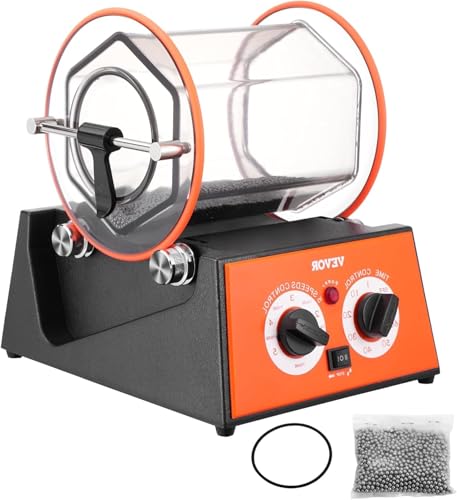
- 5 kg batch capacity
- Five speeds and bidirectional rotation
- Leak-resistant barrel with stable rubber feet
Best For: Batch polishing jewelry, gemstones, coins, and small metal parts
Best High-Speed Handpiece

- Variable speed up to 35,000 rpm
- Compact handpiece with foot-pedal control
- Works with 2.35 mm burs
Best For: Precision polishing, grinding, trimming, and finishing
Best Magnetic Finisher
KT-185 Magnetic Jewelry Polisher

- Magnetic pins reach recessed areas
- Up to 2,000 rpm with reversible rotation
- 180 mm barrel includes 200 g of pins
Best For: Deburring and polishing irregular jewelry and small parts
Best Adjustable-Speed Jewelry Polisher – Digital Bench Buffer
This jewelry polisher is a compact, versatile choice for small studios and home workspaces. Its 350W motor, adjustable speed up to 10,000 RPM, stable cast-iron base, and broad accessory kit support tasks ranging from delicate jewelry finishing to grinding, carving, and rust removal.
Best For: Buyers who want an all-purpose bench polisher with digital speed control and included wheels, paste, goggles, and a flexible shaft.
Pros:
- Adjustable 0–10,000 RPM speed range for gentle or high-speed polishing.
- Compact design with rubber feet and pre-set mounting holes for stability.
- Includes multiple wheels, polishing paste, goggles, and a flexible shaft.
- Handles jewelry, gemstones, machine parts, engraving, grinding, and cleaning.
Cons:
- The flexible shaft must be installed on the left spindle.
- Its corded design requires access to a 110V electrical outlet.
Choose this model if flexibility and included accessories matter more than the smallest possible footprint. The separate speed control and stable base make it adaptable, but users should follow the spindle and safety guidance carefully.
Best Liquid Jewelry Polisher – Weiman Fine Jewelry Cleaner
For shoppers seeking jewelry polishers in a simple liquid format, this Weiman cleaner offers a low-effort way to refresh compatible fine jewelry. The included tray and brush help lift dirt and buildup from gold, platinum, titanium, and several precious gemstones without using a mechanical buffer.
Best For: Routine cleaning of gold, platinum, titanium, diamond, sapphire, ruby, emerald, and topaz jewelry.
Pros:
- Includes a cleaning tray and brush for convenient application.
- Can soak jewelry for up to 30 minutes before rinsing and buffing.
- Formulated for several precious metals and gemstones.
- Helps restore shine by removing everyday product buildup.
Cons:
- Not formulated for silver.
- Should not be used on coral, ivory, amber, malachite, pearls, opals, jade, or turquoise.
- It is a liquid cleaner rather than a powered jewelry polishing machine.
This is a practical pick for light-duty, at-home jewelry care when the item is compatible with the formula. Check the material restrictions before use, especially for silver or softer and porous gemstones.
Best Compact Jewelry Polisher – VEVOR Bench Buffer
This VEVOR bench buffer is a compact jewelry polisher for shoppers who need powered polishing in a small workspace. Its 1/2HP motor, stepless 0–8,000 RPM control, and included cotton and abrasive fiber wheels make it suitable for jewelry repair as well as metal and wood projects.
Best For: DIY users and repair work that need a portable benchtop buffer with variable speed and multiple wheel types.
Pros:
- 1/2HP motor with adjustable speed from 0 to 8,000 RPM.
- Includes two 4-inch cotton wheels, three abrasive fiber wheels, and polishing compound.
- Cast-aluminum base and rubber feet help reduce wobbling.
- Compact, 5-pound design is easy to move and store.
Cons:
- Its maximum speed is lower than some competing models in this roundup.
- The listed accessory set does not include goggles.
- It is a corded 110V machine.
The VEVOR is a strong space-conscious option when portability and basic versatility are priorities. Its variable speed and accessory selection support varied materials, while the compact housing makes it easier to keep available between projects.
Best Silver Jewelry Polisher – Wright’s Silver Cream
This cream-based option is a practical alternative to powered jewelry polishers for silver items and other compatible surfaces. Wright’s Silver Cream is ammonia-free, includes a polishing cloth, and is designed to remove tarnish while leaving a protective coating intended to delay its return.
Best For: Cleaning and polishing silver jewelry, flatware, trays, chrome, pewter, porcelain, and stainless steel.
Pros:
- Fast-acting cream designed to restore shine and remove tarnish.
- Ammonia-free formula includes a polishing cloth.
- Leaves a protective coating intended to keep tarnish away longer.
- Suitable for several surfaces, including silver and stainless steel.
Cons:
- It is a hand-applied cream, not a mechanical jewelry polisher.
- Users should test a small area before treating the entire item.
- Requires polishing, rinsing, and buffing dry.
Consider Wright’s when tarnish removal is the main goal, particularly for silver jewelry and household pieces. Its included cloth simplifies finishing, but careful spot-testing remains important before broader use.
Best On-the-Go Pick – Connoisseurs Jewelry Wipes
For quick, low-effort jewelry care, these Connoisseurs wipes are a practical alternative to larger jewelry polishers and liquid cleaners. The dry, disposable wipes require no water and are designed for gold and silver jewelry.
Best For: At-home touch-ups, travel, and routine cleaning of gold and silver rings, necklaces, earrings, and bracelets.
Pros:
- No-water-needed design is convenient for travel or quick use.
- Each wipe cleans and polishes with a single application.
- Includes 30 individually usable wipes in a compact, easy-open package.
- Leaves an anti-tarnish layer intended to help retain brilliance.
Cons:
- Disposable wipes may be less suitable for frequent, heavy-duty polishing.
- Designed around gold and silver rather than a dedicated machine-polishing process.
If convenience matters more than machine-level finishing, this compact pack makes jewelry maintenance simple. It is especially useful when you want a fast polish without water, tools, or setup.
Best Machine Option – VEVOR 3kg Rotary Jewelry Tumbler
For workshop-style finishing, this VEVOR jewelry polisher uses a rotary tumbler rather than a hand-applied wipe. Its 3 kg capacity, five speeds, bidirectional rotation, and adjustable timer provide more control for polishing, grinding, buffing, and related finishing tasks.
Best For: Users polishing jewelry, gemstones, coins, and metal parts who want adjustable machine-assisted finishing.
Pros:
- 3 kg polycarbonate tumbler has an integrated, leak-proof design.
- Five speeds, bidirectional rotation, and a 10–60-minute timer offer flexible adjustment.
- Designed for polishing, chamfering, trimming, rough finishing, and fine grinding.
- Non-slip, shock-proof rubber base supports stable operation.
Cons:
- At 8.5 pounds and 9 by 6.1 by 9 inches, it requires dedicated storage and workspace.
- Its corded 110-volt, 45-watt design is less portable than wipe-based jewelry polishers.
- Using iron beads or steel balls adds setup requirements beyond a simple wipe.
This is the strongest fit for repeat polishing jobs and users who want speed and process control. Its capacity and adjustable settings are more than most casual jewelry-cleaning needs require.
Best Silver Restoration Wipes – Weiman Jewelry Cleaner
These Weiman wipes are a straightforward choice for silver care when you want tarnish removal and polishing without operating a machine. The ammonia-free formula is designed for silver, silver plate, jewelry, and several other metals.
Best For: Restoring dull or tarnished silver jewelry and maintaining silver, gold, brass, copper, or aluminum pieces.
Pros:
- Restores shine by removing tarnish and polishing the surface.
- Ammonia-free formula is intended for use with jewelry containing diamonds or gemstones.
- Non-scratch formula leaves a protective coating to help prevent tarnish from reforming.
- Works on silver, silver plate, gold, brass, copper, and aluminum.
Cons:
- The 20-count pack provides fewer wipes than the 30-count Connoisseurs option.
- As a wipe, it is better suited to surface care than batch or precision machine polishing.
Choose this option when tarnish restoration is the priority, particularly for silver pieces. It combines a protective finish with broad metal compatibility in a simple wipe format.
Best Rotary Tumbler – VEVOR 5kg Jewelry Polisher
For shoppers comparing jewelry polishers, this VEVOR rotary tumbler offers a substantial 11-pound capacity with adjustable speed, rotation direction, and cycle time. Its leak-proof polycarbonate barrel and rubber feet are designed for stable, less messy operation while polishing, grinding, deburring, or buffing jewelry and other metal parts.
Best For: Users who want a versatile rotary tumbler for multiple jewelry pieces, gemstones, coins, and small metal components.
Pros:
- 5 kg capacity supports batch polishing.
- Five speeds, bidirectional rotation, and a 10-to-60-minute timer allow process adjustments.
- Leak-resistant polycarbonate construction and nonslip rubber feet support steady operation.
- Suitable for polishing, chamfering, trimming, grinding, and surface finishing.
Cons:
- Its 11-pound size may be more machine than needed for very small jobs.
- The listed operating speed is 130 rpm, so it is designed for rotary tumbling rather than high-speed hand finishing.
This is a practical choice when capacity and control matter more than portability. The adjustable settings make it easier to match the tumbler to different materials and finish requirements.
Best High-Speed Handpiece – N3 35K RPM Jewelry Polisher
Among jewelry polishers, this N3 technician-handle system is suited to detailed handwork rather than batch tumbling. Its variable-speed micromotor reaches up to 35,000 rpm and supports polishing, cutting, milling, trimming, grinding, and finishing with compatible 2.35 mm burs.
Best For: Jewelry makers, lab users, and artists who need a compact, foot-pedal-controlled hand tool for precision work.
Pros:
- Variable speed from 0 to 35,000 rpm supports different finishing tasks.
- Compact control box and portable handpiece are easy to position at a workstation.
- CAM-twist bur changing is designed for straightforward tool exchange.
- Front bearings are intended to reduce heat and noise during high-speed use.
Cons:
- It is intended for 2.35 mm burs, limiting tool compatibility to that size.
- The product is listed at 220 volts, so electrical compatibility should be confirmed before purchase.
- It is a handpiece system, not a barrel-style polisher for unattended batch work.
This model makes the most sense for controlled, close-up finishing where speed and maneuverability are priorities. Its broad material-use list also makes it useful beyond jewelry, including ceramics, glasswork, woodcarving, and artware.
Best Magnetic Finisher – KT-185 Magnetic Jewelry Polisher
This KT-185 magnetic tumbler is one of the more specialized jewelry polishers, using magnetic pins to reach holes, cracks, tubular sections, and other difficult areas. Its 180 mm barrel, automatic forward-and-reverse rotation, cycle reminder, and cooling vents support repeatable polishing, deburring, chamfering, washing, and rust removal.
Best For: Users polishing irregularly shaped jewelry and small parts with recessed areas or hard-to-reach surfaces.
Pros:
- Magnetic action is designed to polish holes, cracks, tubular sections, and other dead ends.
- Up to 2,000 rpm and selectable one-way or two-way rotation provide flexible processing.
- Includes a 180 mm barrel and 200 g of burnishing pins for processing multiple pieces.
- Cycle reminder and fan-assisted heat management support longer, less hands-on operation.
Cons:
- Its 180 mm barrel is smaller than the VEVOR model’s stated 5 kg capacity.
- Magnetic tumbling may be less suitable when a nonmagnetic rotary process is preferred.
- The product is specialized for small-part finishing rather than general-purpose hand polishing.
The KT-185 stands out when access to recessed or irregular surfaces is the main challenge. Its automatic rotation modes and cycle alert make it a convenient option for repeat finishing tasks.
How We Picked These Jewelry Polishers
We selected products representing the main ways jewelry is cleaned and polished: liquid cleaners, disposable wipes, polishing creams, bench buffers, rotary hand tools, rotary tumblers, and magnetic tumblers. We considered the intended materials, capacity, speed control, included accessories, portability, ease of use, and suitability for occasional home care versus repeated workshop use.
Because jewelry varies widely, no single polisher is ideal for every piece. Delicate stones, plated surfaces, intentional patinas, and loose settings may require a gentler method or professional service.
Quick Comparison
| Type | Best For | Main Advantage | Watch For |
|---|---|---|---|
| Liquid cleaner | Gold, platinum, diamonds, and compatible gemstones | Simple soak-and-brush cleaning | Not suitable for every porous or soft stone |
| Wipes | Fast touch-ups and travel | No setup or liquid spill | Limited heavy tarnish removal |
| Polishing cream | Silver tarnish | Targeted hand polishing | Requires careful cloth application |
| Bench buffer | Frequent workshop polishing | Powerful, consistent buffing | Needs secure setup and technique |
| Rotary or magnetic tumbler | Batch finishing and deburring | Hands-off processing | Media, time, and load selection matter |
| Rotary hand tool | Detailed or hard-to-reach work | Precise control | High speeds can remove material quickly |
Key Buying Factors for Jewelry Polishers
Material Compatibility
Check whether the product is designed for sterling silver, gold, platinum, gemstones, ceramics, or other materials. Avoid abrasive methods on plated jewelry, soft stones, pearls, opals, and pieces with fragile settings unless the manufacturer specifically approves them.
Control and Capacity
For machines, variable speed and timer controls make it easier to adapt the process. Tumbler capacity determines how many pieces can be processed at once, while barrel and bowl design affect the type of media and jewelry that can be used.
Accessories and Maintenance
Included cotton wheels, brushes, polishing cloths, or media can reduce startup costs. Also consider replacement consumables, cleaning requirements, noise, vibration, ventilation, and available bench space.
Safety and Technique
Wear eye protection when using powered polishers, secure loose clothing and hair, and follow the speed limits for each wheel or attachment. Test an inconspicuous area first, and keep stones and settings protected from snagging or excessive heat.
Who Should Buy Which Jewelry Polishers?
Choose a liquid cleaner or wipes if you mainly want to refresh finished jewelry with minimal equipment. A silver polishing cream is a better choice for visible tarnish on compatible silver pieces. Pick a bench buffer if you regularly polish metal and have a stable workspace and experience with buffing wheels.
A rotary hand tool suits detailed craft work and small correction areas, while a rotary tumbler is more convenient for batch finishing and deburring. Choose a larger tumbler when capacity matters; a compact model is easier to store and better for smaller workloads. Magnetic tumblers are worth considering when you need fine finishing in tight areas, but they require compatible media and careful process control.